The round fights back
A twenty-minute round used to be flat: the same intensity at minute two as at minute nineteen, then a quiet timeout. Two new systems change that. Fall behind and the game sends a champion after you; keep the score close to the wire and the last minute turns into a lit-up, no-hiding brawl.
The comeback ace
The problem with a blowout is that the losing team stops trying and the winning team stops paying attention. So when one side falls more than a few kills behind with real time still on the clock, the trailing team is handed an ace: a named enemy pilot flying at full skill in a tougher plane, carrying a fat bounty on his head. He drags a gold ribbon everywhere he goes and shows up as a gold diamond on the minimap, so both teams know exactly who he is — there's nowhere for him to hide, and that's the point. He's no rubber-band cheat: he flies the same planes and the same controls everyone else does. He's just good, and he's a target worth chasing.
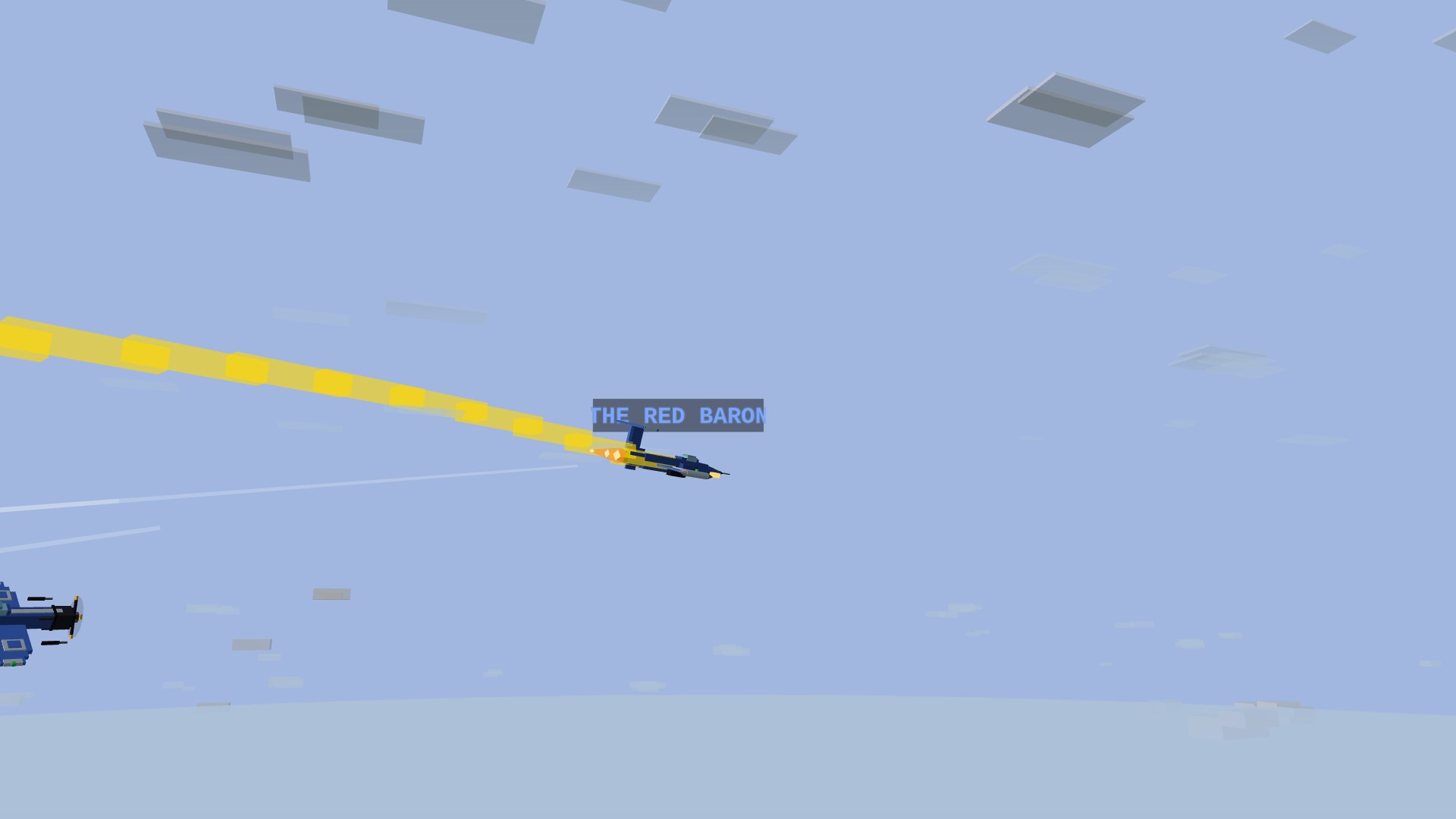
For the trailing team he's a rallying point: form up on the gold ribbon and you've got a fighting chance to claw the gap back. For the team in front he's a bounty and a warning — shoot him down and you're paid for it, but ignore him and he'll quietly even the score. He spawns once per round, doesn't respawn when he dies, and retires the moment the round is no longer close, so he only ever exists to keep a lopsided match interesting.
Overtime
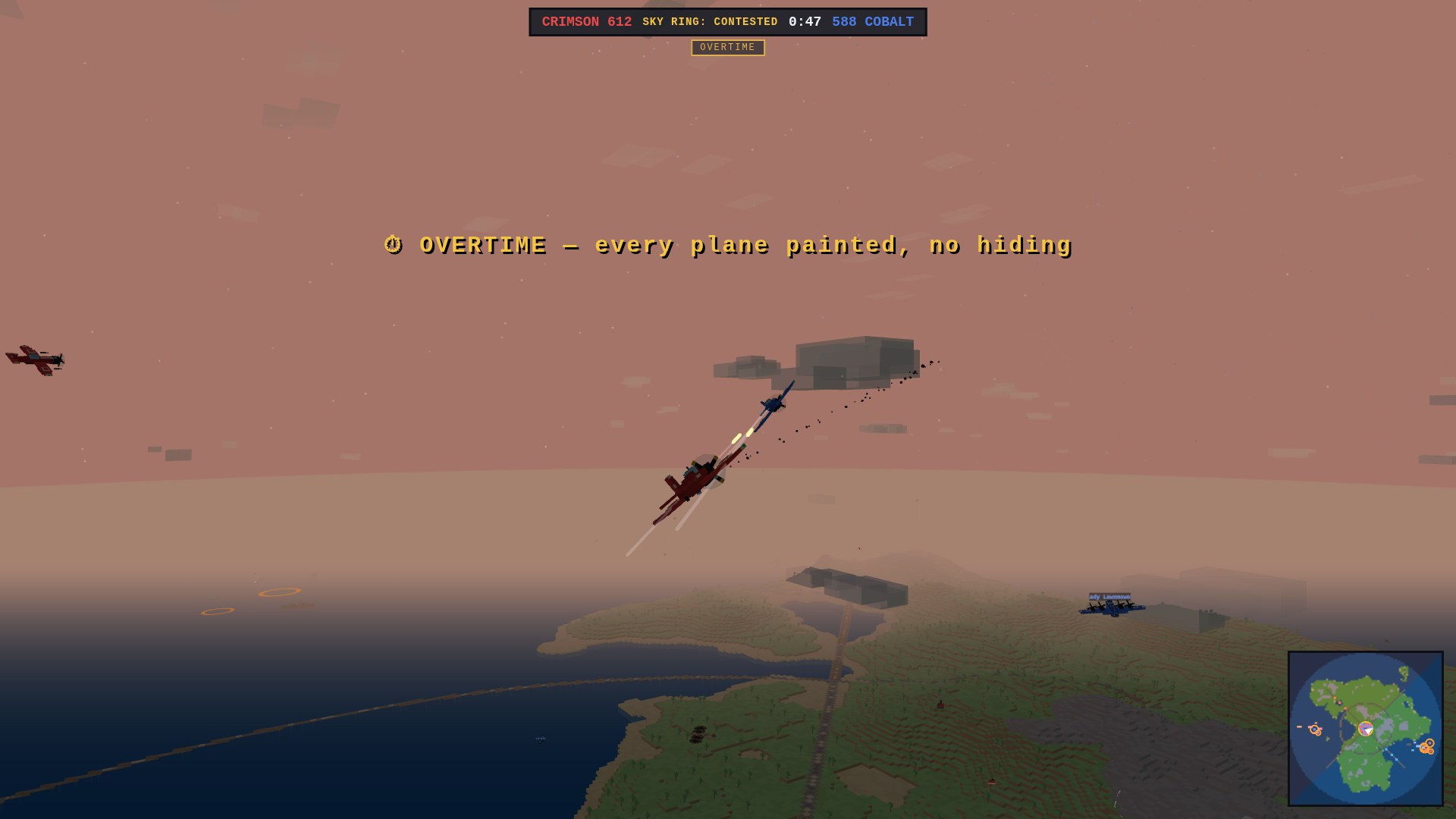
The other failure mode is the opposite: a close round that ends in a whimper because the clock just runs out. So when the last minute arrives with the scores within a few kills of each other, the match latches OVERTIME. The sky shifts to a hot golden-hour cast with a slow breathing pulse, the music floors, a banner slams in — and then the mechanical teeth: radar rules are suspended. For the rest of the round every plane on both sides paints on both minimaps, no exceptions. Nobody gets to sit in a corner and run out the clock; a close finish forces everybody to converge.
It's deliberately presentation-and-information, not a rules rewrite. Scoring, the zone, and the win condition are all untouched — overtime doesn't change how you win, it just makes the last sixty seconds impossible to hide through. And it only fires when it should: a round that's about to cap out on points, or one that's already lopsided, never triggers it. Once it's latched it stays latched, so a brief swing in the score doesn't flip the banner on and off.
Together they fix the same complaint from two directions: the middle of a match should build, not sag. Get buried and a champion comes to drag you back into it; stay neck-and-neck and the finish turns the lights on and makes everyone fight in the open. Next door there's a third system that makes it personal — the pilot who keeps killing you gets a name.